


Coinbase + Kalshi: Distribution Wins 📲
Coinbase announced a partnership with Kalshi, bringing regulated prediction markets directly into the largest crypto exchange in the U.S.
This matters for one simple reason: distribution beats ideology.
Kalshi is positioning itself as a liquidity layer, not just a standalone app. In just a few months, it went from “the boring regulated one” to integrating across Solana, Base, Phantom Wallet, media outlets like CNN and CNBC, and now Coinbase. The strategy is clear: be everywhere users already are.
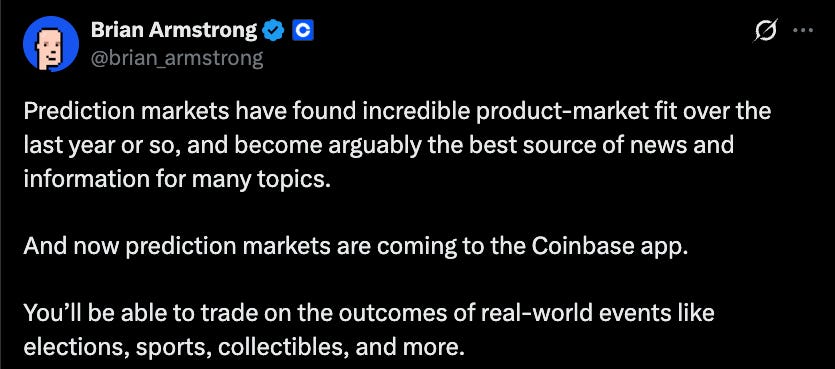
This also clarifies something uncomfortable for builders:
If a highly liquid general-purpose prediction market is embedded directly into major wallets and apps, the opportunity is no longer “another Polymarket.”
It’s niche markets, specialized use cases, or new primitives — not clones.
Predict’s Explosive Launch: Growth or Airdrop Gravity? 🎁
Predict went from zero to ~$1.5M TVL in ~24 hours, then crossed ~$20M in notional volume shortly after.
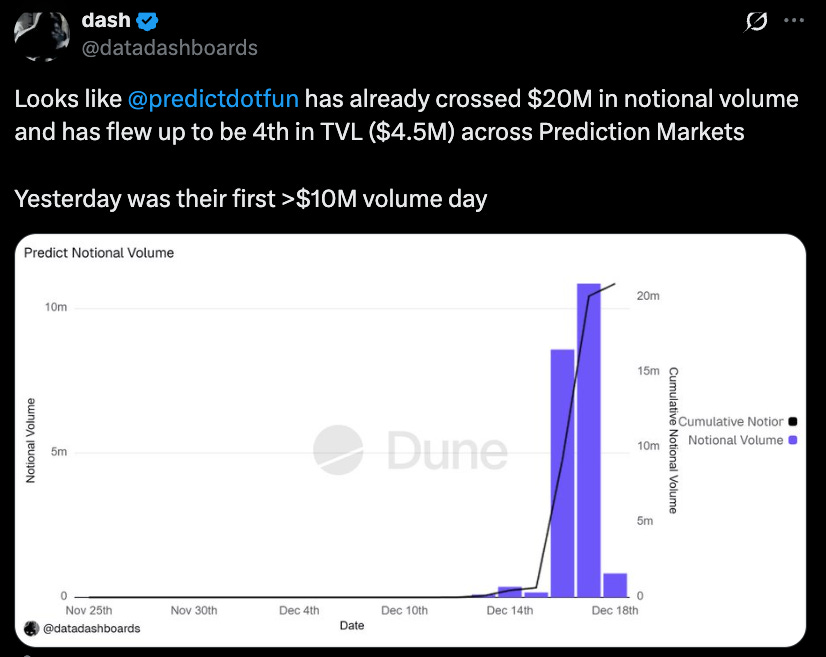
That speed grabs attention — but the harder question is durability.
Early usage appears heavily driven by incentives and points. The product itself doesn’t yet introduce a clear new mechanic beyond what already exists. This looks less like organic product-market fit and more like liquidity teleportation — a familiar pattern from previous cycles.
The real test isn’t day-one volume. It’s whether volume stays once incentives fade.
“Prediction Markets Are the Meme Coins of 2023” 🤔
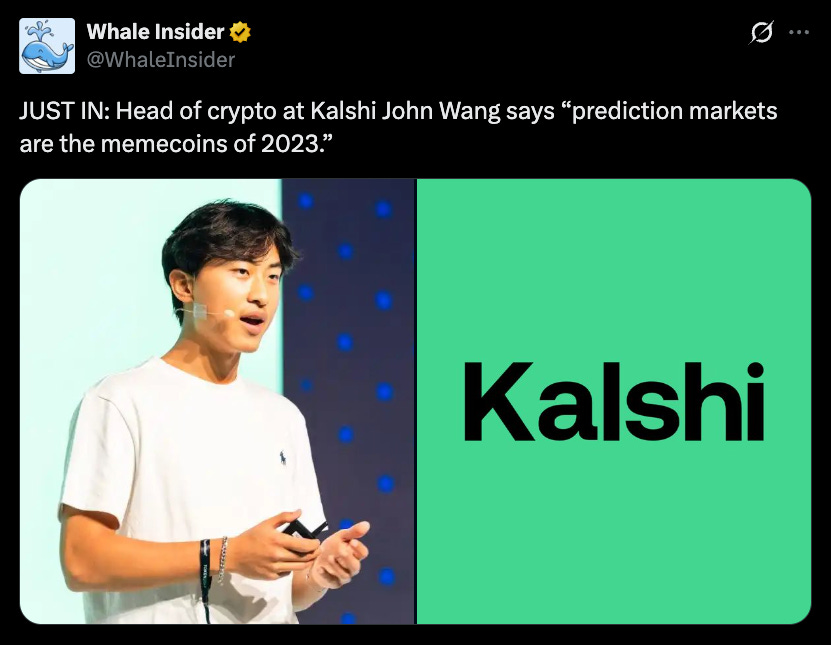
The comparison keeps resurfacing — and it’s mostly wrong.
Meme coins monetize hope.
Prediction markets monetize belief under constraints.
That difference matters.
Data consistently shows that meme coins concentrate upside in a tiny fraction of insiders, while prediction markets distribute outcomes more evenly — with defined rules, hedging, and resolution.
They don’t produce overnight millionaires at scale, but they also don’t rely on narrative extraction.
From an ecosystem perspective, this shift is healthy. If crypto’s breakout consumer app is markets tied to reality, not pure reflexive speculation, credibility improves.
Polymarket vs PumpFun: Attention Is Rotating 🔄
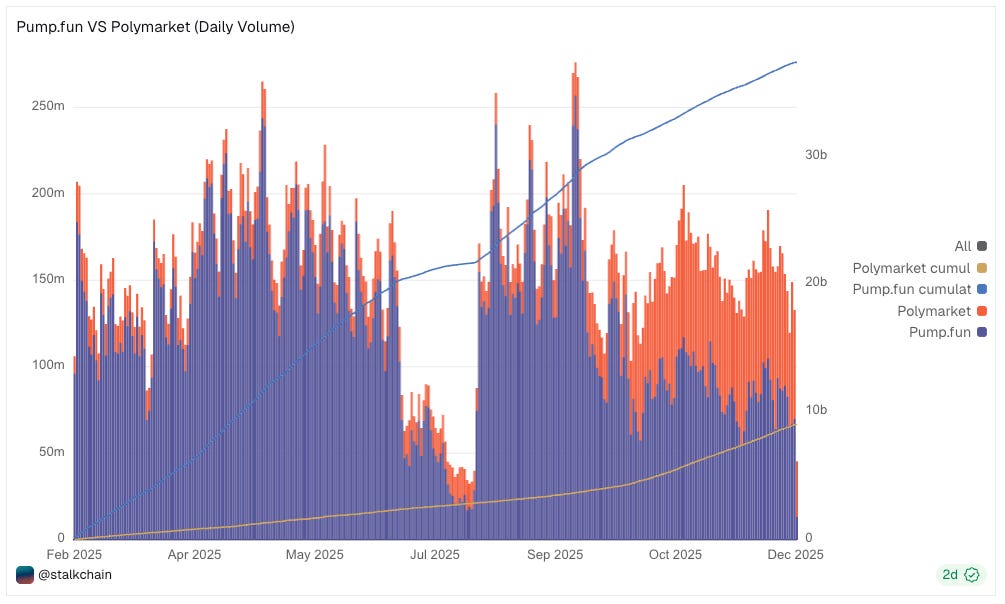
Polymarket overtaking PumpFun on certain volume metrics isn’t about one “winning” over the other.
It’s about where attention is being priced.
Memecoin activity reflects attention without structure. Prediction markets price attention with resolution.
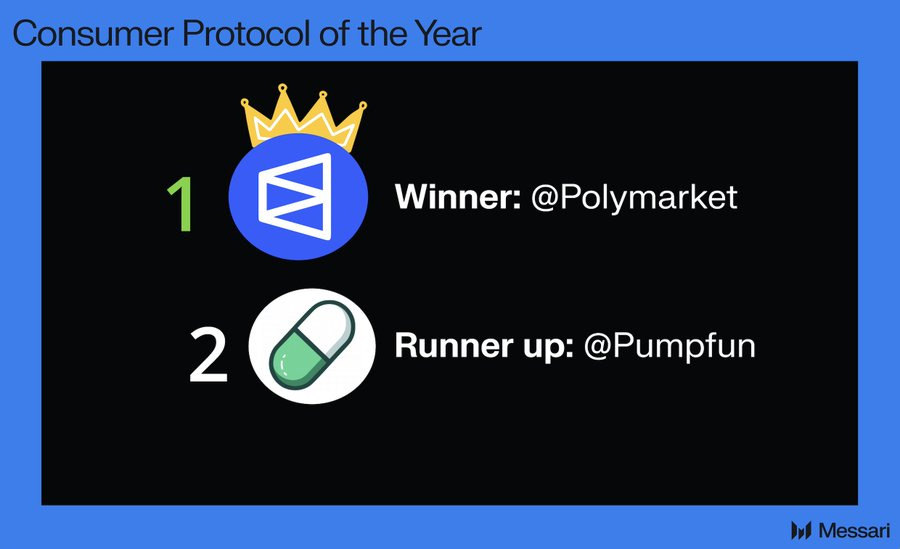
That makes them more durable as infrastructure — even if they’re less exciting in screenshots.
Why Being Onchain Still Matters ⛓️
Most users don’t care if a market is onchain — until composability matters.
Onchain markets unlock:
Transparency around resolution and volume
Tokenized positions that can be moved, hedged, or collateralized
Integration with DeFi primitives (lending, structured products, automation)
Web2 prediction markets can exist.
Onchain prediction markets can interoperate.
That’s the difference.
Kalshi Combos (Parlays): Degenerate, But Inevitable 🎰
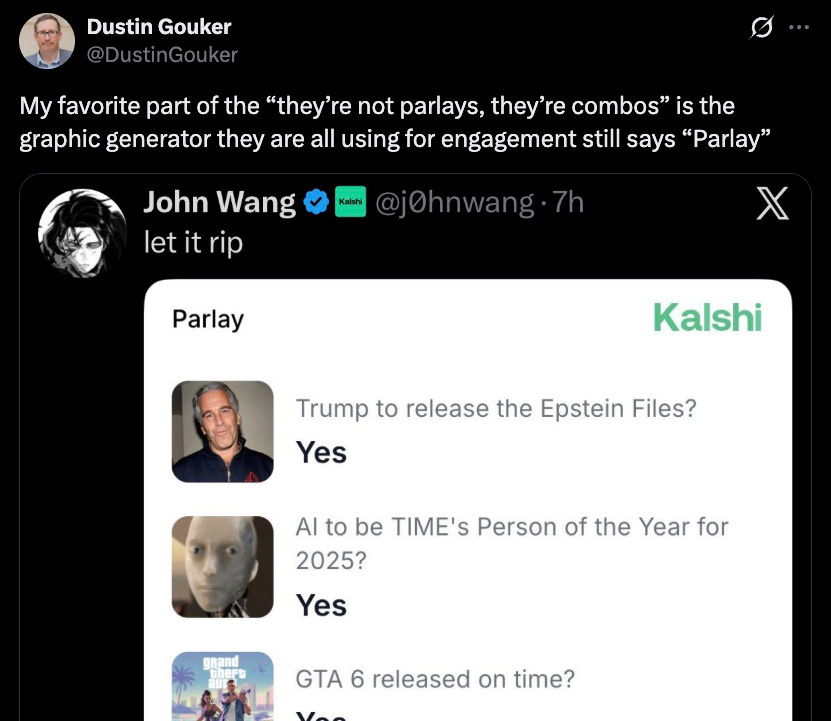
Kalshi launched “Combos” — effectively parlays across multiple events.
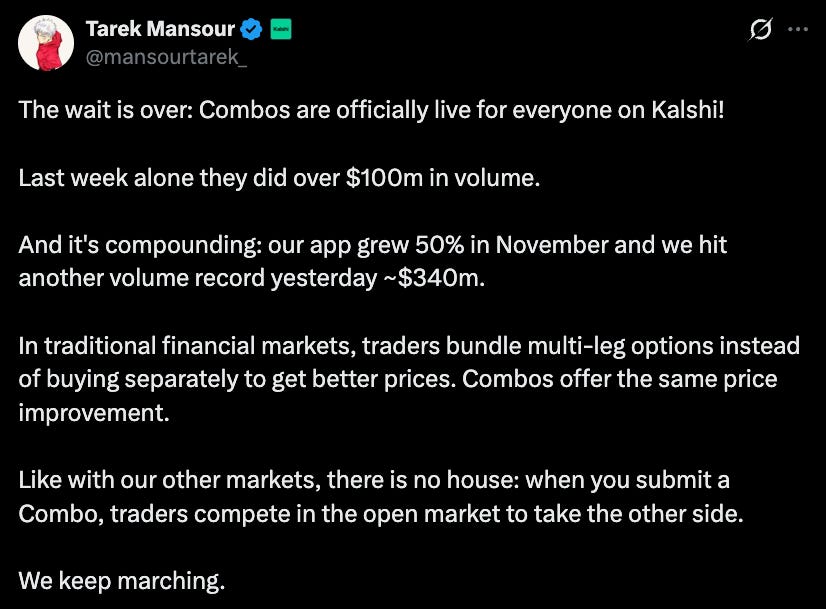
This is not innovation in concept; it’s innovation in market structure.
Bundled outcomes increase capital efficiency and user engagement, but also increase tail risk and behavioral excess.
They’ll drive volume.
They’ll also attract scrutiny.
Both are true.
Trading Mindshare: Markets on Attention Itself 🗣️

Kalshi also introduced markets on “mindshare” — letting traders speculate on which assets, narratives, or platforms dominate attention.
These markets blur the line between signal and noise.
They’re entertaining, sometimes useful, and often reflexive.
Think of them as meta-markets: fun, self-reinforcing, and not always informative.
The Coalition for Prediction Markets 🏛️
The launch of the Coalition for Prediction Markets, backed by Coinbase, Robinhood, Crypto.com, Kalshi, and others, signals a coordinated regulatory push.
The message is consistent:
Prediction markets are not casinos
There is no house
These are peer-to-peer financial contracts
Federal oversight beats fragmented gambling law
Translation: incumbents see pushback coming — especially from traditional betting interests — and are getting ahead of it.
A New resolution oracle for Polymarket? 🔮
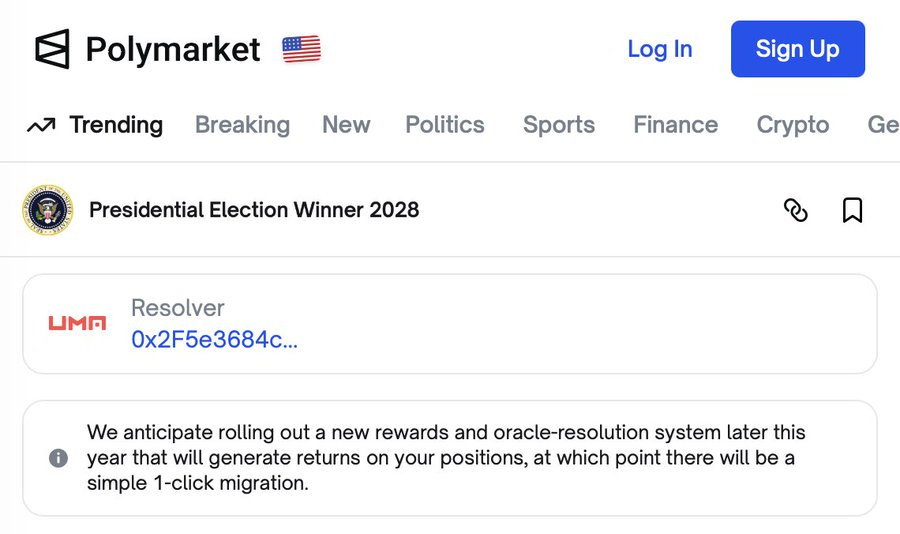
Only a small percentage of markets fail resolution — but when they do, they fail loudly.
Resolution isn’t just about data sources. It’s about:
Ambiguous rules
Language interpretation
Cultural context
Governance incentives
Hybrid models (data feeds + humans + automation) are emerging, but no one has solved fast, trust-minimized resolution at scale yet. This remains the weakest link in the stack!
Looking Ahead 🔭
What to watch in 2026:
Sports markets and global events (World Cup-scale moments)
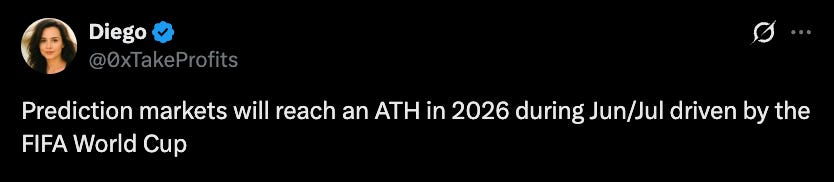
Source: X Niche prediction markets with clear audiences
DeFi integration around prediction positions
Resolution innovation, especially for cultural markets
Regulatory pressure from legacy betting incumbents

Prediction markets aren’t replacing everything tomorrow. But they’re quietly embedding themselves everywhere that probabilities matter. And that’s most of the world!
📬 BEFORE YOU GO — SUBSCRIBE, FOLLOW, WATCH
Follow @DollarTrade on X
And subscribe to the newsletter.
Thanks for riding with us!