


🧠 THE PREDICTION MARKETS SUPERCYCLE
Tulip King published one of the most widely discussed theses of the year: a detailed argument that prediction markets are entering a 10-year supercycle, fundamentally reshaping how information is priced and decisions are made.
His central idea:
Prediction markets collapse thousands of specialized market structures into a single efficient primitive, and over time this model will absorb large pieces of traditional finance.
The long-term vision includes:
Event-driven markets becoming as standard as options
Prediction platforms functioning as infrastructure
Liquidity forming around cultural, political, corporate, and financial outcomes
A world where future expectations are priced more clearly than current assets
But the pushback is equally strong.
Prediction markets don’t provide asset ownership, don’t replace settlement systems, and don’t fully map onto instruments requiring duration or carry. The more realistic framing: prediction markets will become a new pillar, not a total replacement.
And then—Jim Cramer posted a photo with Kalshi's CEO:
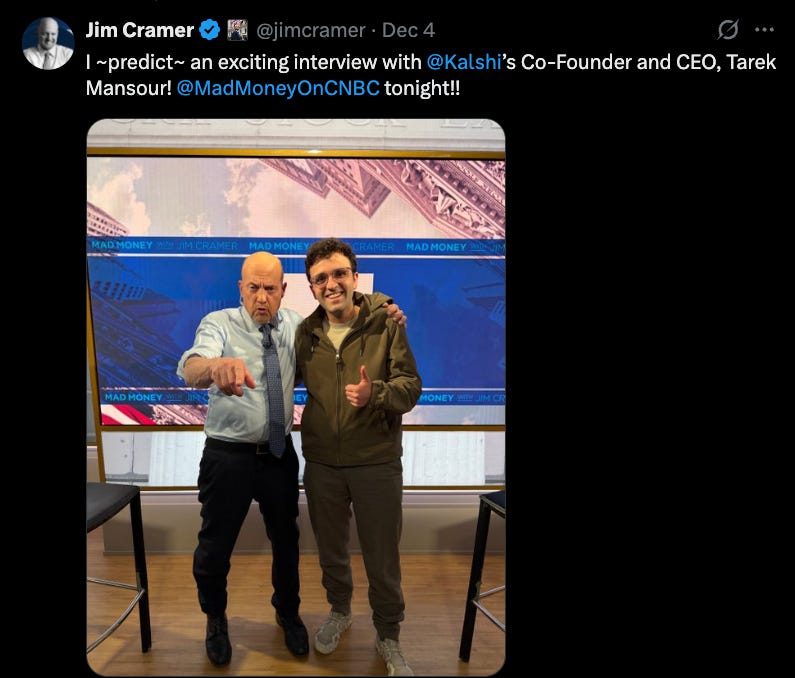
Which, based on historical patterns, was taken as a leading indicator that the supercycle thesis may not be dead at all.
It’s over guys…
📺 MEDIA ALIGNMENT: CNN LAST WEEK, CNBC THIS WEEK
Prediction market influence crossed another threshold as CNBC announced a partnership with Kalshi, just days after Kalshi integrated with CNN.
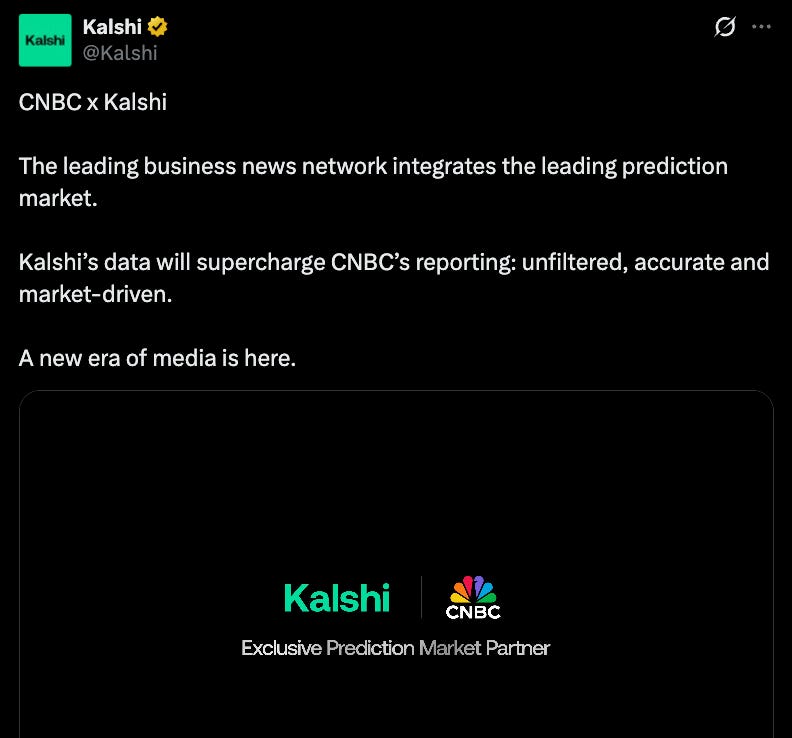
This marks the first time two of the world’s largest financial and political media outlets have formally integrated prediction market data into their reporting frameworks.
Kalshi described the collaboration as:
A new era of media… accurate and market-driven.
The dynamic is shifting quickly:
Prediction markets are no longer being referenced by media — they are becoming the informational layer that media outlets increasingly rely on.
🦊 POLYMARKET INSIDE METAMASK
Polymarket is now directly accessible from MetaMask Mobile, enabling real-money participation without separate onboarding or new interfaces.

This continues an emerging pattern:
Kalshi integrated into Phantom
Myriad integrated into Trust Wallet
Polymarket integrated into MetaMask
Wallets are positioning themselves as the next major distribution channel for prediction platforms.
This significantly lowers friction and broadens access to millions of users.
📊 DATA INSIGHTS — POLYMARKET’S 5TH HIGHEST DAY EVER AND LIMITLESS HITS $20M DAILY VOLUME
According to DataDashboards Polymarkets hit $218M in 24h notional volume, it's 5th top day in Polymarket history, with no election cycle and no major global catalyst.
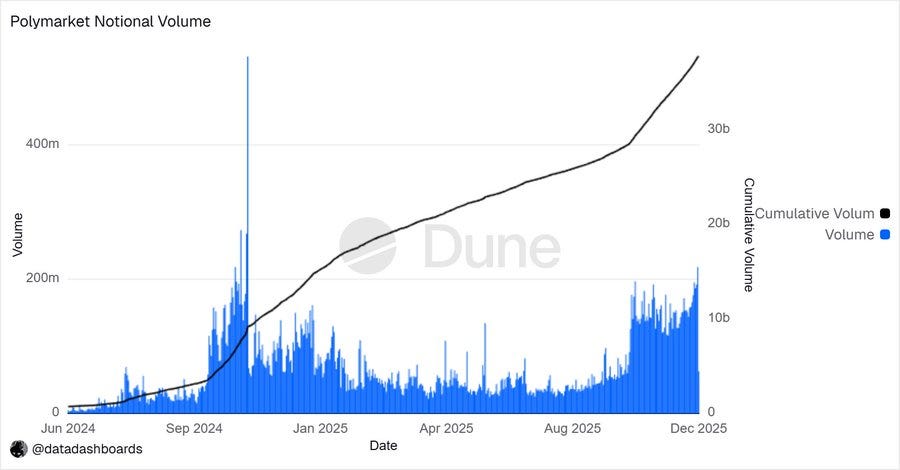
Volume split:
50% sports
30% politics
20% crypto + culture
This highlights the diversification of demand. What was once election-driven volume is now increasingly also powered by cultural and crypto-native markets.
Yet despite the size, Shayne Coplan reiterated:
“Polymarket does not make money… we lose money.”
This mirrors early-stage Web2 and Web3 infrastructure companies, but sustainability questions will eventually loom.
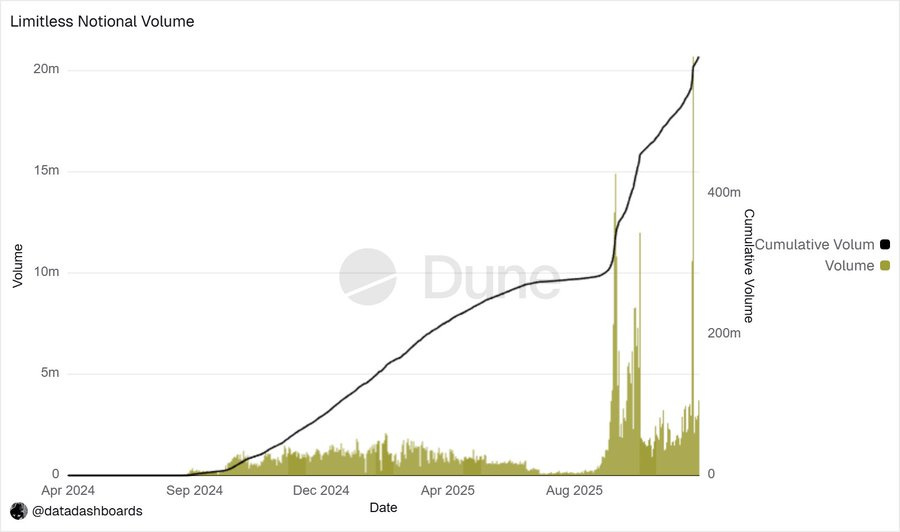
On another front, Limitless recorded an unexpected all-time high with over $20M daily volume, a vertical move well above its previous range, reinforcing that the category is expanding beyond the two major players.
🧮 SPORTS ARBITRAGE: THE NEW META
Carlos Blocks demonstrated emerging cross-platform arbitrage opportunities, signaling the beginning of a much larger quant wave.
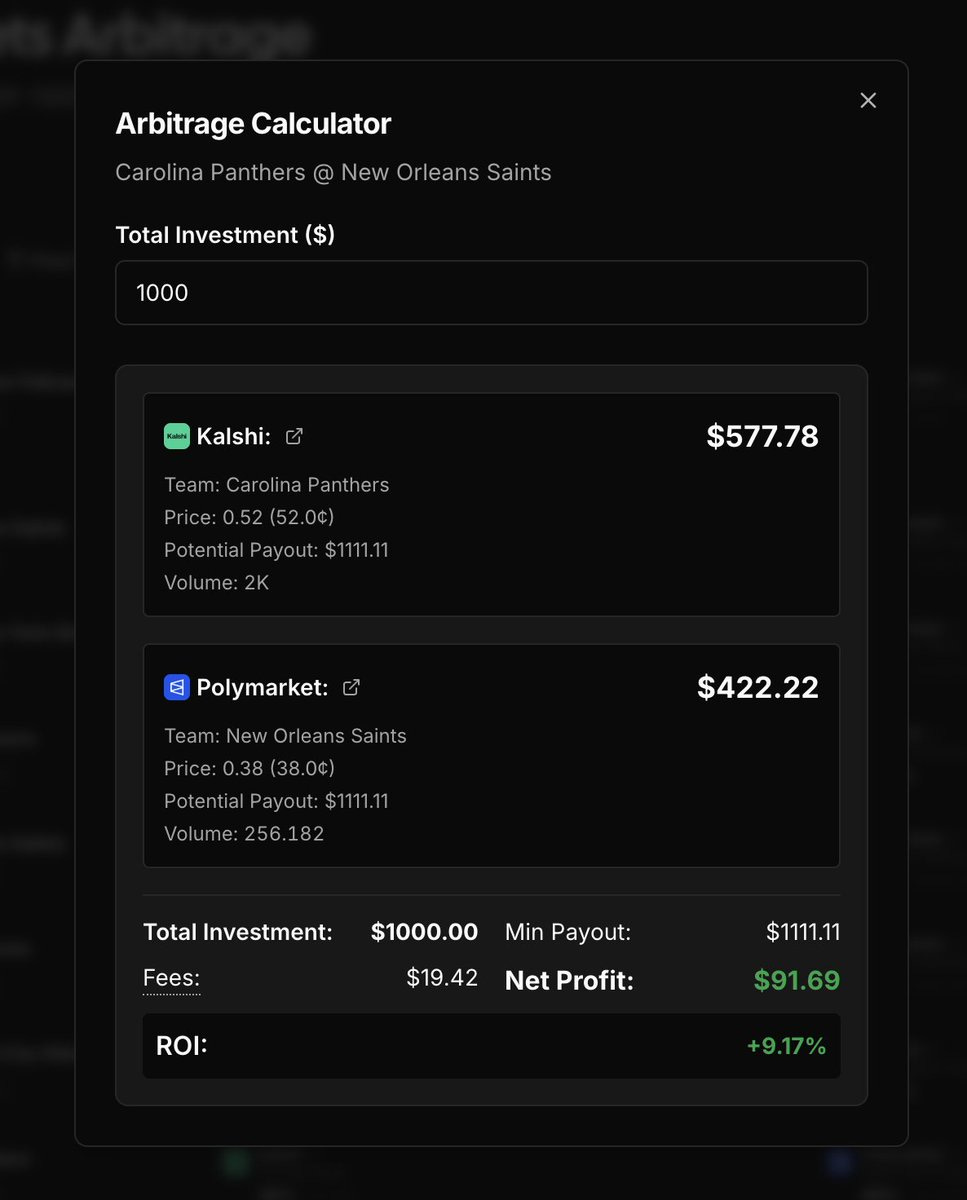
As more liquidity enters prediction markets and APIs stay open:
Arbitrage windows will shrink
Speed and automation will dominate
Professional traders will edge out manual retail opportunities
This mirrors the early days of crypto exchange arbitrage — profitable until it became industrialized.
🔍 MARKET MANIPULATION ATTEMPTS
Polyfactual surfaced real examples of coordinated or attempted manipulation in prediction markets (mostly historical).
Examples included:
Swaying low-liquidity markets
Coordinated misinformation campaigns
Gaming resolution criteria
Sniping thin order books
The conclusion:
Manipulation is extremely difficult at scale because too many participants are watching too closely.
Prediction markets benefit from crowdsourced adversarial defense, but remain vulnerable where liquidity is thin or resolution criteria are ambiguous.
On another front, a striking data point surfaced this week: an account reportedly earned over $1M across Google Search markets.
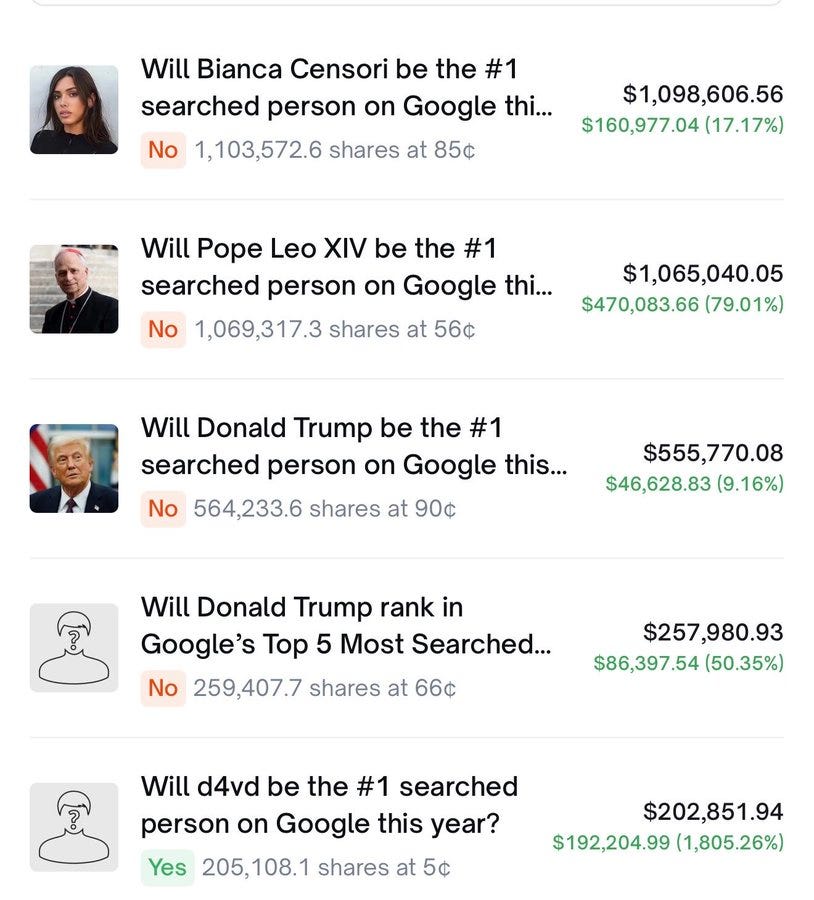
Unusually accurate timing raised speculation about whether the user had early access to search-volume data.
Two important points emerged from community discussion:
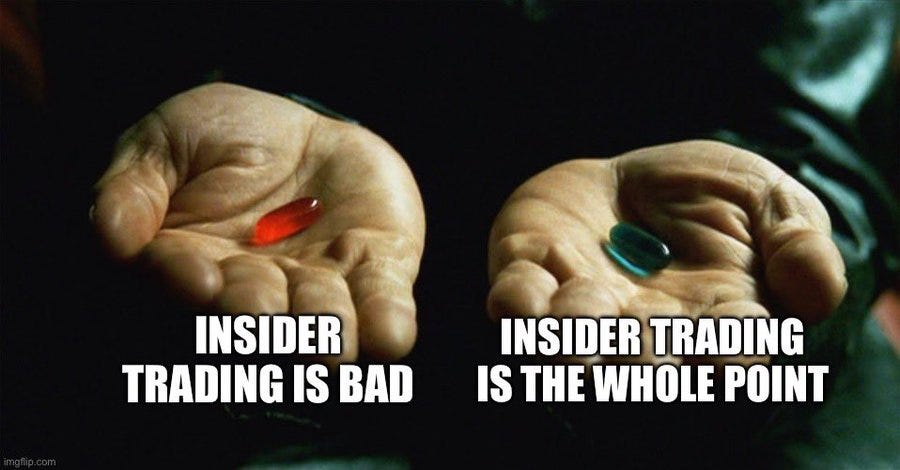
Prediction markets cannot influence the underlying event, which complicates the traditional definition of insider trading.
Regulators will still care if users leverage non-public information that materially advantages them.
The debate isn’t about whether someone influenced outcomes — but whether asymmetric access undermines market fairness.
This is a frontier topic with no settled framework.
So, what do you think about it?
🔥 THE “IS THIS GAMBLING?” DEBATE RETURNS
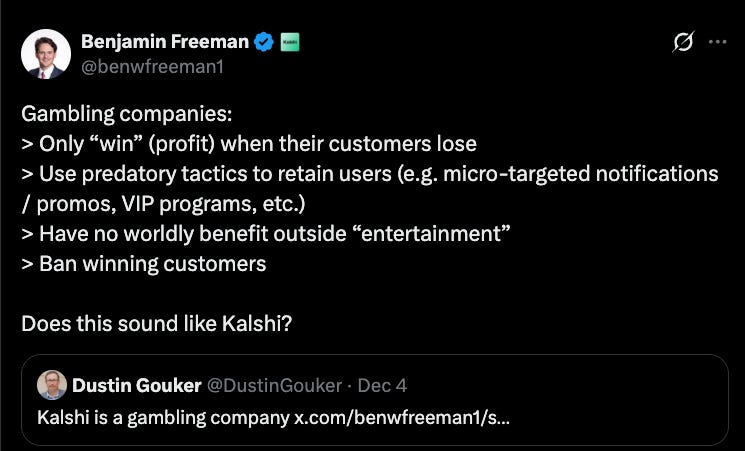
The conversation escalated when Dustin Gouker asserted:
“Kalshi is a gambling company.”
This triggered detailed rebuttals from Ben Freeman and others, emphasizing:
Kalshi is legally not gambling
Prediction markets do not have a house
Participants can use them skillfully (or not)
The classification depends heavily on context
A key insight resurfaced:
Speculation is universal — but the presence of a house is what defines predatory gambling.
Prediction markets remove the house.
This difference matters — legally, economically, and philosophically.
Still, public perception is far from settled, and even religious arguments surfaced claiming PMs violate spiritual rules around uncertainty and risk-taking.
The best summary came from Heisenberg: Almost anything can be used for gambling. That doesn’t make everything gambling.
🚗 THE MERCEDES CHALLENGE — $2,000 → A CLA 200
GreekGamblerPM launched a new public challenge:
Deposit: $2,000
Goal: Buy a Mercedes CLA 200
All P/L from the account goes toward the car
He has already posted early gains and plans to share positions transparently.
His last challenge took $100 → $10K.
This type of publicly trackable challenge injects narrative energy into prediction markets — and demonstrates how traders anchor goals to real-world outcomes.

🎥 POLITICAL CAMPAIGNS FUNDED BY PROBABILITIES
A widely shared clip this week explored how prediction markets could be used to bootstrap political campaigns.
Tulip King's argument:
If a candidate has a 0.5% chance of winning, shares in their market are extremely cheap.
By purchasing positions, distributing them to supporters, and raising probabilities through campaigning, the group could unlock large payouts upon victory.
This is theoretical — and almost certainly on shaky legal ground — but it demonstrates the creativity prediction markets inspire around incentives, funding, and collective action.
A dedicated project, PolyFund, is already exploring compliant frameworks for political fundraising on-chain.
🔮 CLOSING THOUGHTS
Over the past several days, prediction markets revealed themselves as:
A financial tool
A cultural mirror
A political instrument
A media data source
A speculative playground
An emerging regulatory puzzle
A rapidly professionalizing trading environment
Supercycle or not, the category is expanding across every dimension: liquidity, participants, integrations, institutions, and narratives.
The next phase will depend on two things:
trust and resolution quality.
Everything else is accelerating on its own.
📬 BEFORE YOU GO — SUBSCRIBE, FOLLOW, WATCH
Follow @GroovyMarket_ on X
Check out playground.groovy.market
And subscribe to the newsletter.
Thanks for riding with us!