


The Double-Counting Controversy 🔧📊
A technical discovery by Paradigm researcher Storm (@notnotstorm) triggered the biggest discussion of the week:
Polymarket’s smart contracts would emit multiple log events per trade — which caused some dashboards to double count on volume.
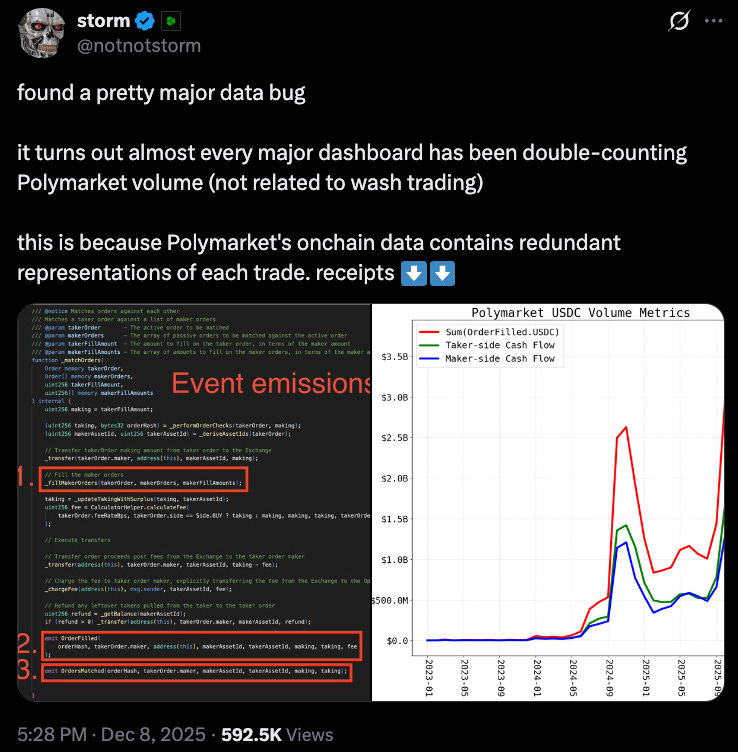
The situation escalated as multiple Paradigm-linked accounts amplified the issue, and many observers misunderstood the mechanics.

The prediction market community responded immediately:
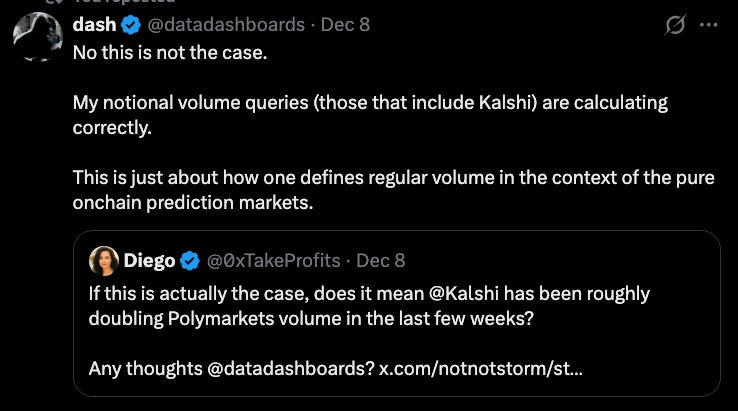
The metrics reflect taker notional volume, the industry standard
John Wang clarified that a $0.01 buy appears as $1 volume because the counterparty completes the remaining $0.99 — the full contract always totals $1
We want to make it clear that the data we’ve shared with our readers so far has been accurate from the start.
⚠️ Key takeaway:
The debate showed how fragile narratives become when analytics, incentives, and partial understanding collide — reinforcing the rising importance of specialists like DataDashboards, Kaushinomics, Polymarket Analytics, hildobby, and others who now function as the industry’s unofficial data auditors.
Metric Manipulation or Data Storytelling? 📈🪄
Mick Bransfield resurfaced an old problem in crypto analytics:
Data doesn’t lie, but it can mislead.
Two recurring issues dominated discussion:
Time-window switching: zoom in → “flat,” zoom out → “explosive”
Cumulative charts: they always go up, regardless of actual activity
The lesson is simple:
Data is objective. Storytelling isn’t.
Users need to ask:
What metric is shown?
Over what timeframe?
Why this framing?
Prediction markets are growing fast. Their analytics hygiene needs to grow even faster.
Gambling or Informed Betting? 🎰🧠
This week reignited the identity crisis:
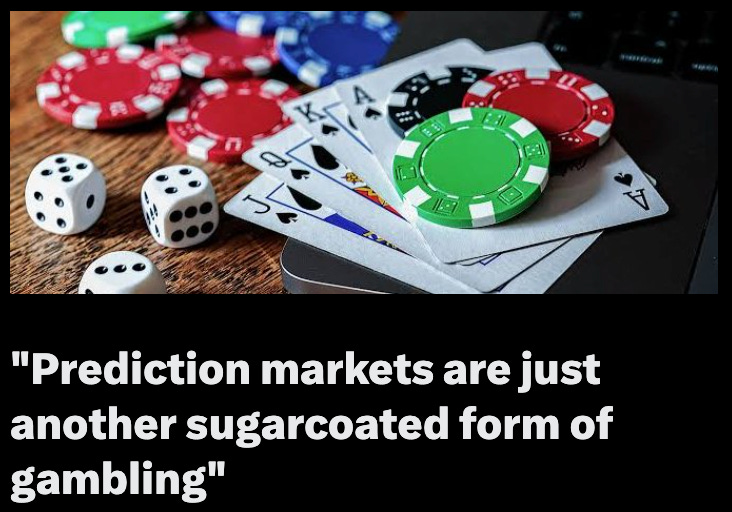
“It’s gambling.”
Critics argue that many markets — especially mention markets — resemble entertainment bets, not forecasting tools.
“It’s informed speculation.”
Supporters counter that prediction markets reward:
timely information
belief updating
accuracy
skin-in-the-game
Traditional gambling rewards luck.
Prediction markets reward information processing.
🟪 The realistic middle ground
Prediction markets can be gambling — but they don’t have to be.
It depends on the market, the incentive, and the trader.
Some markets create public value.
Some markets create fun.
Both can coexist.
Robin Hanson Steps In 🧙♂️📜
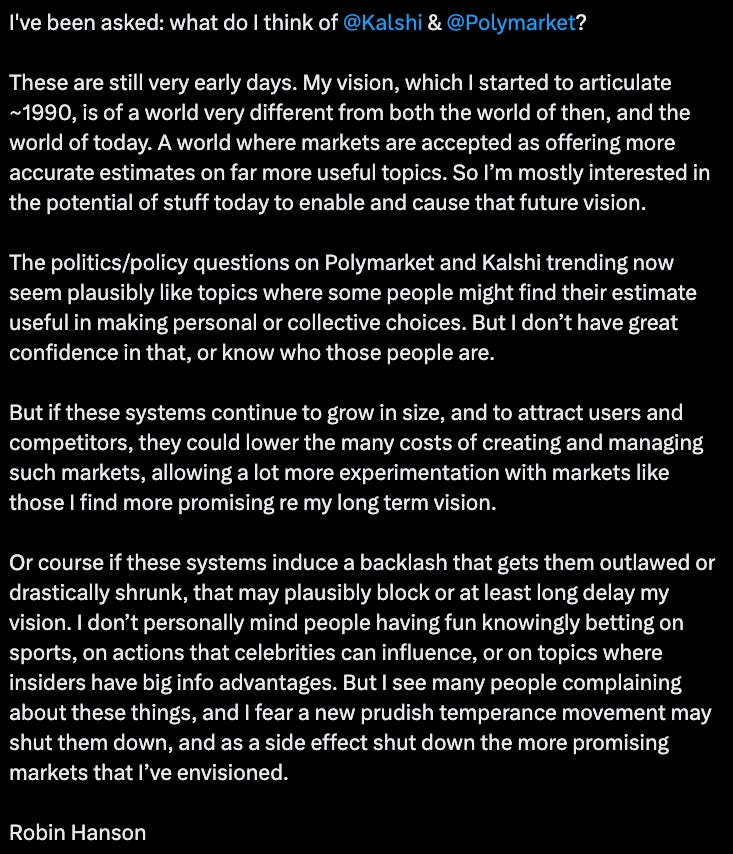
Robin Hanson, the academic pioneer of prediction markets, weighed in with a grounded perspective:
Today’s platforms are primitive compared to the long-term vision
Growth could lead to broader experimentation
But backlash could just as easily shut down high-value markets
A “new temperance movement” against gambling could unintentionally derail forecasting innovation
His message:
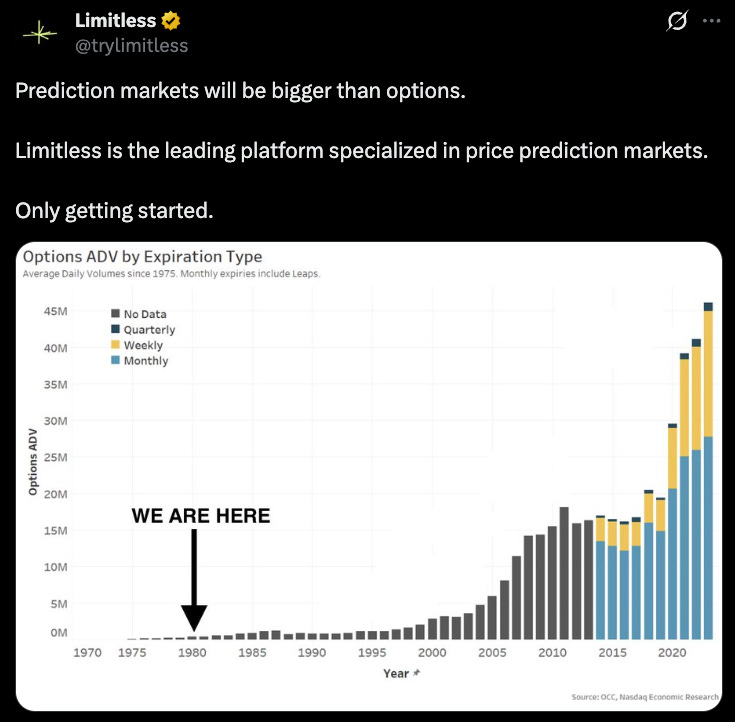
“Prediction Markets Will Be Bigger Than Options” ⚡📉➡️📈
Limitless published a bold claim - and we agree with them:
Prediction markets are on a trajectory to surpass the global options market.
What could be behind it?
Options grew by simplifying uncertainty
Prediction markets simplify uncertainty even further
Accessibility + global liquidity = faster adoption curve
The timeline is debatable, but the structural thesis is gaining weight.
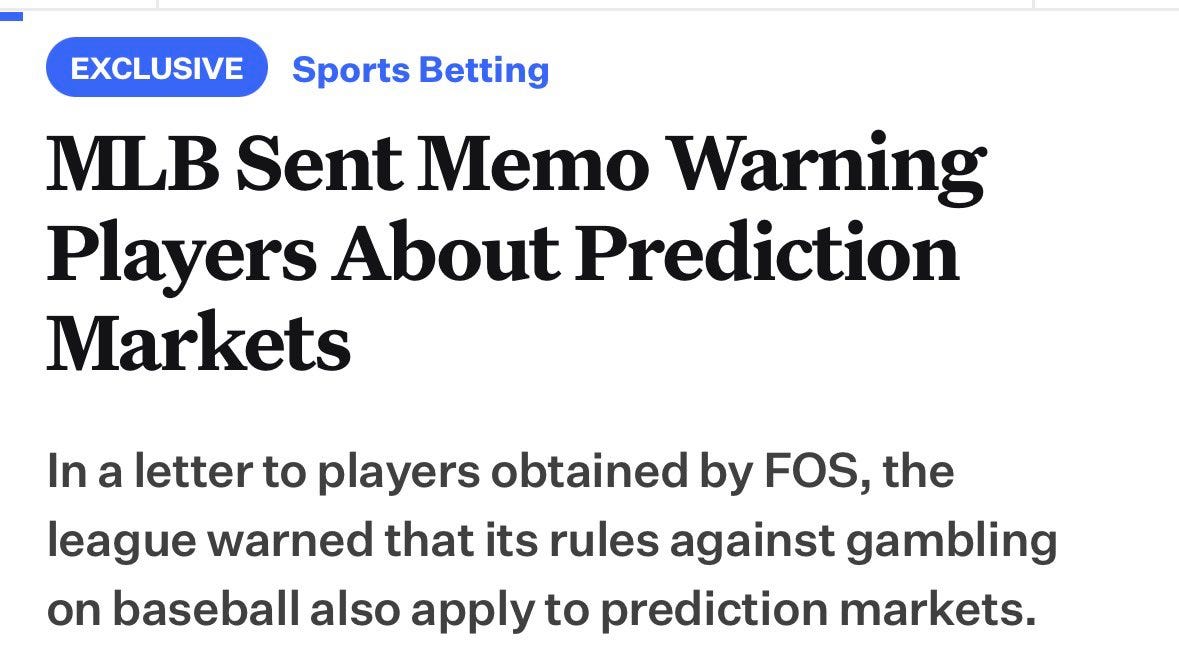
MLB Warns Players About Prediction Markets ⚾🚫
Major League Baseball issued a memo stating that prediction markets fall under the same restrictions as gambling for players.
The logic is straightforward:
Players can influence outcomes
Leagues must protect integrity
Compliance frameworks are coming, whether the industry is ready or not
Expect this to repeat across every major sport.
The TIME Person of the Year Market 🕒🔥
A leaked “Architects of AI” cover sent the Polymarket Time Person of the Year market into chaos.
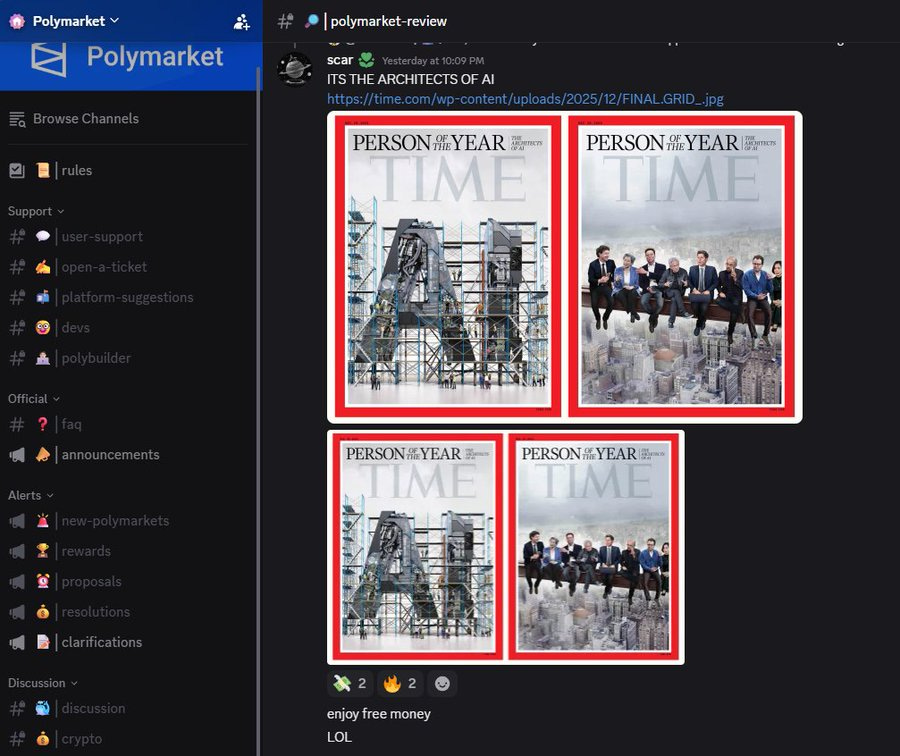
The leak appeared on Polymarket Discord
Markets reacted 20 minutes later
One trader made $100,000+ by rotating early and executing limit orders
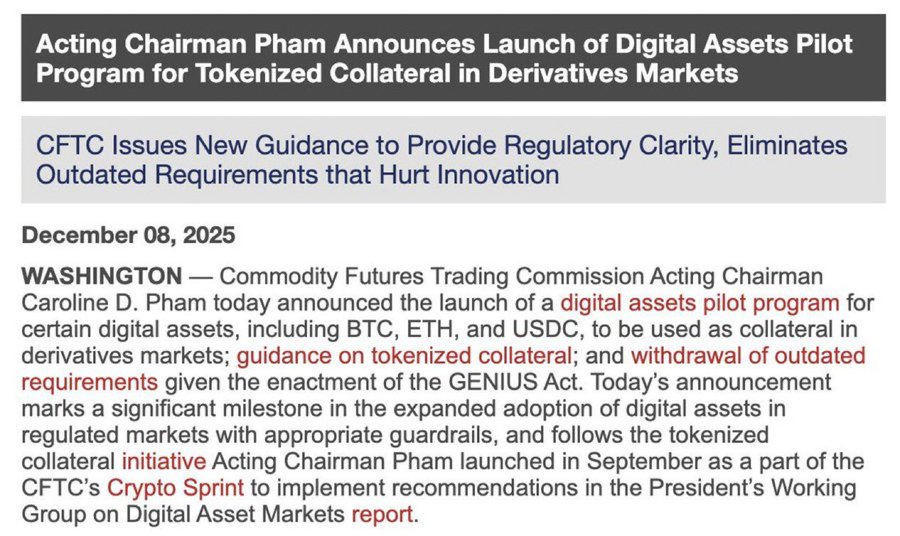
CFTC Allows BTC, ETH & USDC as Derivatives Collateral 🏛️🔓
The CFTC announced a pilot program enabling crypto assets to serve as collateral in derivatives markets.
Why this matters:
Prediction markets are legally a type of derivative
Crypto collateral increases capital efficiency
Institutions holding BTC/ETH now get straightforward pathways into event-driven markets
A small step with large long-term implications.
Kalshi Partners With Freestyle Chess ♟️📡
Kalshi is now the official prediction market partner for Freestyle Chess.
Fans can trade live tournament score markets — a new frontier blending competitive strategy with probabilistic markets.

What’s the Point of Mention Markets? 🤷♂️🎤
Mention markets:
aren’t socially useful
aren’t forecasting tools
bur, can be extremely effective onboarding funnels
They serve a purpose:
Lower the barrier → teach traders how markets move → steer them toward higher-signal markets.
They’re entertainment — and a recruitment mechanism.
🔮 CLOSING THOUGHTS
Prediction markets showed their full range this week — fast growth, confusion, experimentation, and flashes of brilliance. Data fights, rule changes, regulation, and new on-chain tools all point to an industry still defining itself.
One thing is clear: momentum is real, and innovation is happening in public.
More next week.
📬 BEFORE YOU GO — SUBSCRIBE, FOLLOW, WATCH
Follow @DollarTrade on X
And subscribe to the newsletter.
Thanks for riding with us!